

What to Expect on a Fixed Departure Birding Tour
in Colombia: An Honest Guide
QUICK FACTS
|
Start time |
Early - typically 5:00-5:30 a.m. departures, because that's when the birds are active |
|
Daily rhythm |
Peak morning session, lunch and a break, a lighter afternoon, dinner and the day list |
|
Fitness needed |
Moderate - mostly walking gentle trails and roads, but at altitude and for hours |
|
Experience needed |
None. Beginners and veterans mix well on small departures |
|
Group size |
Small - our departures run to a maximum of 7-8 participants |
|
Solo travelers |
Very common, and easy - roommate matching avoids the single supplement |
|
The day list |
An evening ritual on most tours: running through what everyone saw |
What to Expect on a Fixed Departure Birding Tour in Colombia
If you have never joined an organised birding tour, the prospect can be surprisingly daunting. Will everyone else be an expert? Will you slow the group down? What if you cannot keep up, or cannot find the bird everyone else is looking at? These are the questions people actually hesitate over — far more than itineraries or prices. So here is an honest account of what to expect on a group birding tour in Colombia: the rhythm of the days, the people, and which worries turn out to be unfounded.

The shape of a typical day
|
Time |
What happens |
|
5:00-5:30 a.m. |
Departure, usually in the dark. Coffee first. This is the hardest habit to adopt and the one that pays best. |
|
6:00-10:00 a.m. |
The main session. Bird activity peaks in the first hours after dawn - most of the day's species happen here. |
|
Mid-morning |
Breakfast in the field, often at a feeder station with hummingbirds at arm's length. |
|
11:00-1:00 p.m. |
Activity drops as it warms. A slower session, a drive to the next site, or time at a lodge feeder. |
|
1:00-3:00 p.m. |
Lunch and a genuine break. Rest, sort photos, or nap - most people need it. |
|
3:00-6:00 p.m. |
A second, lighter session as the birds become active again in the cooler afternoon. |
|
Evening |
Dinner and the day list - running through what the group recorded. Then an early night. |
Two things surprise first-timers. The first is how early everything is; the second is how tired you are by nine at night. Tropical birding is genuinely a full day of concentration, and almost everyone goes to bed early without embarrassment.
The worries people actually have
|
Common worry |
The reality |
|
Everyone will be more expert than me |
Some will be. It matters far less than you think - experienced birders enjoy helping, and nobody is keeping score. |
|
I'll slow the group down |
Small groups move at the group's pace by design. A good guide manages this so nobody feels rushed or held back. |
|
I won't find the bird in time |
Guides give directions constantly - clock positions, landmarks, scope views set up for you. This is a learnable skill and it comes fast. |
|
I'm traveling alone and won't know anyone |
Solo travelers are extremely common on birding tours. Within a day the group is a group. |
|
I'm not fit enough |
Most birding is slow walking on trails and roads. Altitude is the real factor, not distance - and we take it gently. |
|
My gear isn't good enough |
Binoculars matter more than cameras, and the guide's scope is shared. Nobody is judged on equipment. |
What the guide actually does
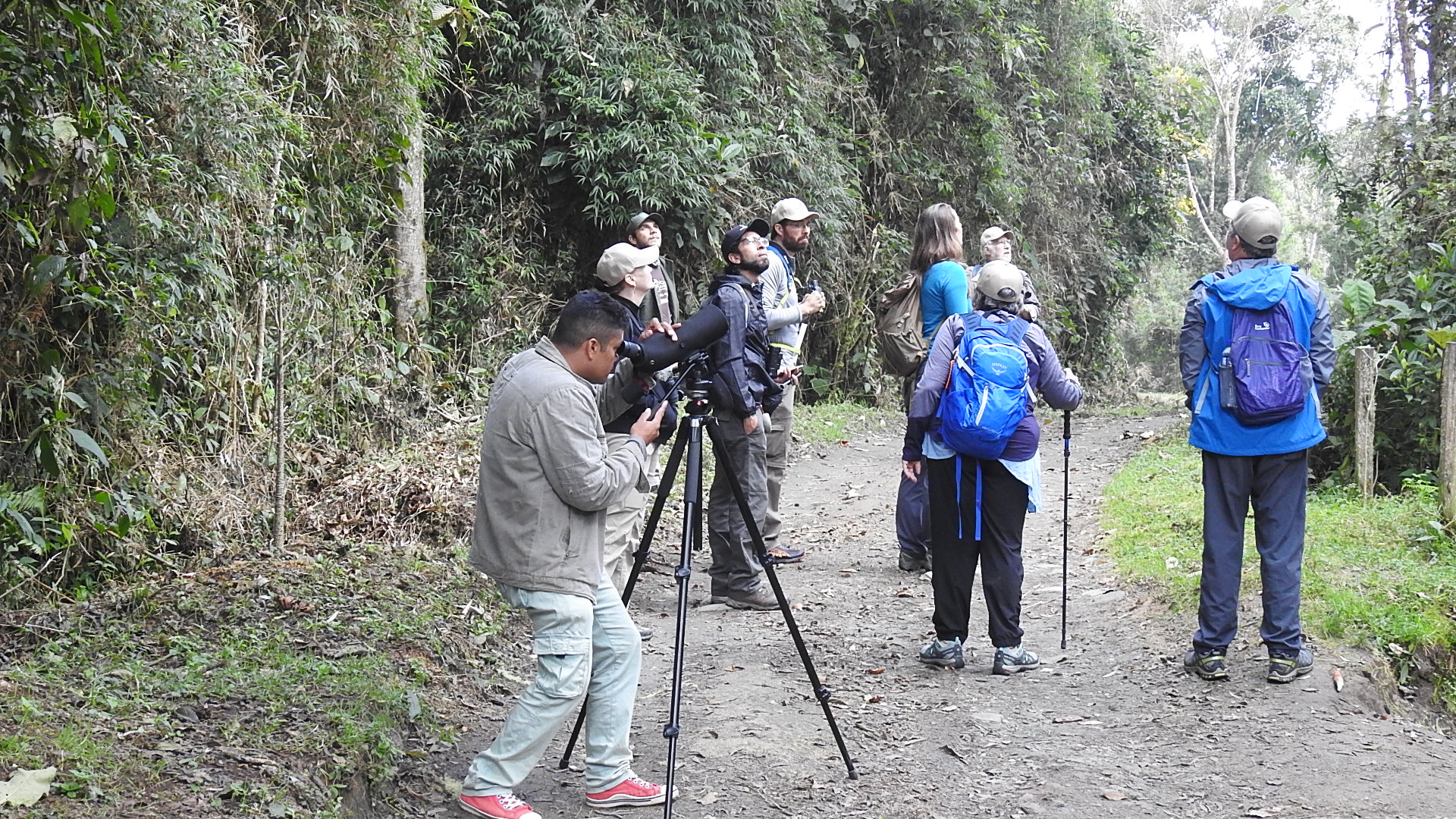
A common misconception is that the guide simply drives you places. In practice the guide is doing several things at once: finding birds by ear long before they are visible, positioning the group so everyone has a sightline, giving directions to the bird, setting up the scope, identifying what you are looking at, and quietly tracking who in the group still needs which species.
You do not need to know anything in advance. Ask questions freely — most guides, ours included, would far rather explain something than have you nodding politely at a bird you cannot see.
The physical side, honestly
Colombian birding is not strenuous in the way a trek is, but it is not sedentary either. Expect to be on your feet for several hours at a stretch, often on uneven forest trails or gravel roads, sometimes in rain. Distances are usually modest — a few kilometres at a slow, stop-start pace.
The genuine physical factor is altitude. Some of the best sites sit above 2,500 metres, and a few above 3,500. This affects everyone, fit or not: you will be short of breath doing things that are easy at home. We plan for it by ascending gradually and keeping the pace slow. If you have a health condition affected by altitude, tell us before you book and we will advise honestly whether a given itinerary suits you.
Rough roads deserve a mention too. Reaching the best cloud-forest sites often means an hour or more on unpaved mountain tracks in a 4x4. It is part of the adventure, but if you are prone to motion sickness, come prepared.
Beginners and experts in the same group
This mix works better than people expect. Beginners get to watch experienced birders work — how they scan, how they listen, how they describe a bird's position — which is the fastest way to learn there is. Experienced birders, in our experience, genuinely enjoy explaining what they are doing, and often end up as informal second guides.
What makes it work is group size. On a small departure, the guide can give a beginner extra help without the rest of the group waiting. On a tour of sixteen, that becomes impossible, and the gap between the front and back of the line becomes a real problem.
The social side
Birding groups tend to bond quickly, for a simple reason: you are all doing something slightly obsessive together, at absurd hours, in beautiful places. By day three, someone has become the group's expert on flycatchers, someone else always spots the perched raptor, and the day list at dinner turns into a running conversation.
If you are more reserved, that is fine too. Nobody is obliged to be social — plenty of guests bird intently all day and read quietly in the evening. Small groups accommodate both without effort.

What to bring, briefly
The essentials are simpler than people assume: binoculars you are comfortable with (far more important than a camera), rain protection, layers for temperature swings between valley heat and páramo cold, comfortable broken-in walking shoes or boots, and a water bottle. A field guide or app is useful but not essential — the guide handles identification, and most people find they use their notebook more than their book.
Is a group tour right for you?
It probably is if you want to see a lot of birds without organising anything, if you like the idea of sharing the experience, or if you want the cost benefit of splitting the trip with others. It is probably not if you need complete control over the daily schedule, if you want to linger for hours photographing a single subject, or if you strongly prefer solitude in the field. For those cases a private tour genuinely serves you better, and we run those too — we will tell you honestly which fits.
Still have questions before booking? Good - ask them.
Tell us your experience level and any concerns, and we'll give you a straight answer about whether a departure suits you. See 2027 dates on the Upcoming Tours page, then message Julio on WhatsApp -> WhatsApp link